Understanding Circadian Rhythm: How Sleep Timing Shapes Health
An editorial primer on the body's 24-hour clock, how our living patterns synchronize with it, and practical steps to align daily life with biology for better rest and daytime performance.
What is circadian rhythm and why it matters
The human body runs on a remarkably precise internal timetable—a circadian rhythm that repeats roughly every 24 hours. This clock is not a single organ but a consortium of signals and feedback loops that coordinate when we feel awake, when we crave sleep, and how our hormones, metabolism, and temperature shift over the day. Think of it as an orchestra conducted by the suprachiasmatic nucleus, a tiny cluster of neurons in the brain, which responds to environmental cues and tunes the body’s rhythms accordingly.
The circadian system governs more than sleep. Hormone secretion, especially melatonin and cortisol, fluctuates in predictable patterns. Body temperature cycles influence alertness and cognitive performance. Metabolic processes, from insulin sensitivity to fat storage, are tied to this clock. In short, timing—not just duration—matters. When sleep timing aligns with biology, daytime functioning improves, mood stabilizes, and resilience to stress grows.
Misalignment—think jet lag, rotating shifts, or late-night activity—creates a cascade of effects: daytime sleepiness, impaired attention, reduced executive function, and metabolic disturbances. The modern world, with its 24/7 routines, often nudges people toward a schedule that diverges from their innate rhythms. The result can be a quiet erosion of sleep quality and long-term health.
How daily cues shape rhythms
Circadian timing is highly responsive to cues in our environment and behavior. Light exposure, meal timing, physical activity, and social schedules act as push-pull signals that can advance or delay the clock.
- Light exposure: Morning light helps set a stable wake time by signaling the brain to suppress melatonin and promote alertness. Evening light, especially blue light from screens, can delay melatonin release and push bedtime later.
- Meal timing: When we eat can influence peripheral clocks in organs like the liver and gut. Regular meal times can promote synchronization across the body, while erratic eating patterns may desynchronize internal rhythms.
- Activity patterns: Physical activity tends to advance or stabilize circadian timing, particularly when performed earlier in the day. Late-night strenuous workouts can perturb sleep onset for some individuals.
- Sleep timing itself: Consistent bed and wake times anchor the clock. Irregular schedules often generate chronic misalignment, which over time can erode sleep efficiency and daytime performance.
Jet lag and shift work are the most common real-world manifestations of circadian disruption. They illustrate the clock’s sensitivity to timing cues: move the light-dark cycle, and the rest of the body's systems try to catch up. The body’s adaptive mechanisms are powerful, but they work best when we respect the natural cadence rather than override it with late-night screens or irregular meals.
Practical alignment steps: turning biology into better rest
What follows is a practical toolkit grounded in circadian science. These steps are straightforward, evidence-informed, and designed to be woven into daily life without requiring radical lifestyle overhauls.
- Maintain a consistent wake time: Start your day at roughly the same hour every day, including weekends. This stabilizes the clock and reduces the lag between days.
- Get bright light in the morning: Spend 10–20 minutes outdoors or near a bright window after waking. If outdoors isn’t feasible, a light box can help, particularly during winter or in northern latitudes.
- Dim evening lighting and limit screens: After sunset, shift to warmer lighting and reduce screen exposure at least 1–2 hours before bed to support melatonin production.
- Time meals to support clock signaling: Try to eat meals at regular times and avoid large late-night meals when possible. Consistent meal timing can reinforce peripheral clocks and improve metabolic regulation.
- Napping strategically: If you nap, keep it brief (20–30 minutes) and earlier in the day to avoid interfering with nighttime sleep.
- Create a wind-down ritual: A predictable pre-sleep routine signals the brain that sleep is coming. Consider light stretching, reading a book, or gentle breathwork to ease transitions into restful states.
- Mindful caffeine timing: For most people, caffeine sensitivity lasts several hours. Avoid caffeine late in the day to prevent delays in sleep onset and reduced sleep efficiency.
These steps are not a one-size-fits-all prescription; circadian biology interacts with genetics, age, health status, and personal preferences. The core idea is to align daily routines with your biology, using light, meals, and activity as guiding cues to strengthen the sleep-wake cycle.
Three key historical figures who shaped our understanding of sleep timing
Across centuries, scholars and scientists have illuminated how time governs sleep. Their work not only mapped the clock but also translated abstract chronobiology into practical guidance for everyday life.
1) Jean-Jacques d'Ortous de Mairan (1678–1771)
A French naturalist whose experiments in the 1720s provided early evidence of circadian rhythms in plants. De Mairan observed that daily cycles persisted in leaves even when kept in perpetual darkness, hinting at an internal timing mechanism beyond external cues. Though the research focused on plants, his intuition about endogenous rhythms laid groundwork for later recognition of internal clocks that orchestrate sleep and wakefulness in humans.
2) Franz Halberg (1919–2013)
A pioneering chronobiologist who coined the term “circadian” in the mid-20th century and advanced the study of biological rhythms in humans. Halberg’s work connected timing with health outcomes, emphasizing the relevance of regularity in sleep, meals, and activity for metabolic and cardiovascular well-being.
3) Michael Young (born 1960)
A Nobel laureate whose work on the molecular mechanisms of circadian rhythms illuminated how clock genes coordinate daily cycles. While not a clinician, Young’s research underscored the genetic underpinnings of timing, helping translate abstract rhythm theory into concrete understandings of sleep regulation and its health implications.
Putting it together: circadian rhythm as a bedrock of health
Circadian biology anchors sleep health in a way that connects biology to behavior. A well-timed day supports cognitive performance, emotional regulation, and metabolic balance. In the modern era of omnipresent light and late-day distractions, the circadian system faces more challenges than ever. Yet its malleability offers a practical avenue for improvement: small, consistent adjustments to light exposure, meals, and activity patterns can yield meaningful benefits over weeks and months.
The framework we propose at Intellabed—an educational hub focused on sleep science—centers on translating evidence into accessible guidance. This article is a step toward that goal: a clear, readable primer that respects the science while offering actionable steps for busy readers. By understanding the clock, readers can curate routines that harmonize with their biology, reducing sleep debt and boosting daytime vitality.
A practical note for curious readers
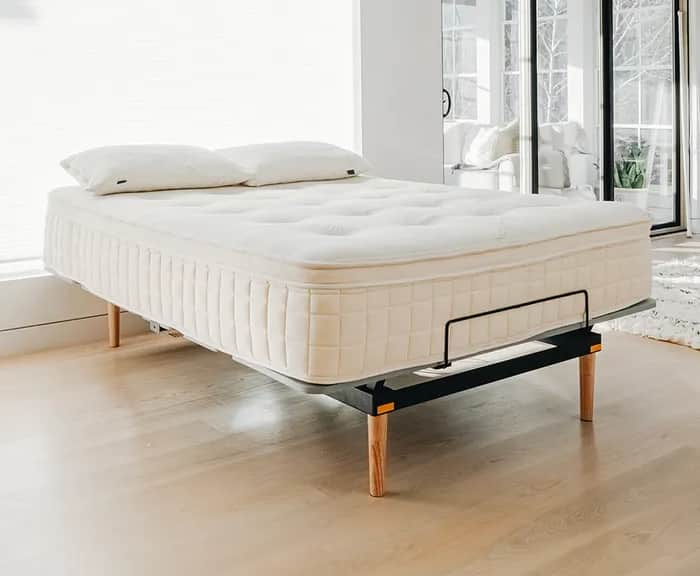
For readers seeking to couple circadian timing with a tangible sleep environment, consider a thoughtfully chosen adjustable bed frame as part of a broader strategy. The Naturepedic Conductor Adjustable Bed Frame exemplifies how modern sleep technology can complement sleep hygiene. With Bluetooth connectivity, memory presets, and a wall-hugger design, it supports personalized comfort while maintaining a calm, sleep-forward bedroom aesthetic. Its organic materials and robust build align with a wellness-oriented approach, making it a fitting reference point in a non-commercial educational context.
Note: This article is informational and non-commercial. While we reference product examples to illustrate concepts in everyday settings, Intellabed remains dedicated to credible, research-based sleep science and practical guidance rather than shopping guidance.
Closing thoughts
Time shapes health, and health, in turn, shapes time. The circadian rhythm governs when we sleep, how we metabolize, and how we perform. By aligning daily cues with our internal clock, we can sleep more soundly, think more clearly, and show up more fully for the moments that matter.
As we continue to explore the science of sleep, Intellabed will stay committed to translating findings into practical guidance. We invite readers to test small adjustments, observe their effects, and join a broader conversation about sleep health grounded in evidence, empathy, and curiosity.