Sleep Science & Mattress Construction
Hybrid Mattress Construction: How Coils and Comfort Layers Work Together
A hybrid mattress is built around a partnership: a spring-based support core beneath cushioning layers that shape the surface. The combination can influence pressure relief, airflow, motion transfer, and firmness—but the word “hybrid” alone does not tell you exactly how a mattress will feel.
Published October 15, 2026
A mattress is not one material so much as a small architecture. Beneath the fabric cover, layers respond to weight, movement, heat, and posture in different ways. In a hybrid design, coils typically provide the central support system, while foam, latex, fiber, or other cushioning materials sit above them. Each part has a job. The experience comes from how well those jobs are coordinated.
That distinction matters because two mattresses can both be called hybrids and still feel strikingly different. One may have a responsive, buoyant surface and a lively spring core. Another may use thicker, slower-moving foam that contours closely and softens the sensation of the coils below. Coil shape and arrangement, layer thickness, material density, and the cover all contribute to the final result.
Understanding the construction does not guarantee a perfect choice; comfort is personal, and the same mattress can feel different to people with different body shapes, sleep positions, and preferences. But knowing what sits beneath the surface can replace vague labels with better questions: Where does pressure go? How does the surface respond when you move? Does the design allow heat and air to circulate? And does the mattress keep the body supported in the positions you actually sleep in?
The basic anatomy of a hybrid
Most hybrid mattresses have three broad elements: a cover, one or more comfort layers, and a coil support core. Some also include a transition layer between the cushioning and the springs, plus a perimeter reinforcement system or a foundational layer beneath the coils. The exact arrangement varies, and not every manufacturer uses the same terminology.
- The cover is the fabric surface. Its stretch, quilting, and padding can subtly affect how readily the comfort layers respond.
- Comfort layers cushion the body and influence contouring, surface softness, and pressure distribution.
- Transition layers, when present, help connect the soft upper layers to the firmer support core, limiting an abrupt change in feel.
- The coil core supplies much of the mattress’s underlying support and contributes to its response and structure.
- Edge support may use firmer coils, foam, or another method to help stabilize the perimeter.
These components do not work in isolation. A comfort layer that compresses easily will behave differently over a tightly responsive coil system than over a less reactive one. A firm coil core may feel gentle if substantial cushioning sits above it, while a softer-looking top can still feel supportive if the layers beneath resist excessive sinking. Construction is a system, not a list of ingredients.
What coils contribute
Coils are spring elements that compress under load and push back as pressure changes. In a mattress, they help distribute weight and provide a responsive foundation. Their performance depends on more than the simple fact that springs are present. Coil type, gauge, height, shape, spacing, number, and arrangement can all affect how a bed responds.
Pocketed coils are individually wrapped, allowing neighboring springs to move with some independence. That can help the surface adapt to different parts of the body and may reduce the spread of movement compared with a system in which coils are more directly linked. It does not make motion disappear: the comfort layers, frame, and overall mattress design also play a part.
Other coil systems connect springs through a shared structure. Connected coils can create a more unified, springy response, though the amount of motion transfer depends on the particular construction. There is no universal rule that one coil design is best for every sleeper. Some people value a springier, more immediately responsive feel; others place a higher priority on minimizing movement across the bed.
Coil firmness is influenced by factors such as wire thickness and spring geometry, but specifications can be difficult to compare across brands. Even a technical figure does not predict how the complete mattress will feel once the upper layers, cover, and sleeper’s body are added to the equation. A coil core is the foundation of a hybrid, not a complete description of it.
Coils can also support airflow through the core because open spaces exist between them. That structural openness may help air move more freely than in a solid block of material. It is only one influence on temperature, however. Dense foam above the coils, a thick quilted cover, room conditions, bedding, and individual heat sensitivity may all shape whether the mattress feels warm or cool.
The comfort layers: contour, cushion, and response
The layers above the coils determine much of the first impression a hybrid makes. They cushion prominent areas such as shoulders and hips, create a particular surface feel, and influence how deeply a sleeper settles into the mattress. Common materials include memory foam, other polyurethane foams, latex, fiber, and combinations of these materials.
Memory foam
Memory foam is commonly associated with close contouring and a slower response to pressure. It can spread load across a broader area and create a more enveloping sensation. For someone who likes a close-fitting surface, that can feel comfortable. A sleeper who prefers to change position easily or to feel more perched on top may find deep, slow contouring less appealing. Formulations differ, and the layer’s thickness and density matter as much as its name.
Other foams
Polyurethane foams cover a wide range of firmness, resilience, and density. Some are designed to respond more quickly than traditional memory foam, producing a buoyant or cushioned feel without the same slow sink. A foam layer can also serve as a transition between a softer top and firmer coils. Because the word “foam” describes a broad family of materials, it is not enough on its own to predict comfort, durability, or temperature.
Latex
Latex comfort layers are often described as responsive and springy, with cushioning that can feel less enveloping than slow-response foam. They may compress under pressure and rebound readily when pressure is removed. The exact feel depends on the latex formulation, how it is processed, its thickness, and the layers around it. “Latex” should not be treated as a guarantee of a particular firmness or temperature experience.
Quilting and fiber
Quilted padding and fiber layers can soften the first contact with the mattress and influence its surface feel. They may be relatively thin, but a layer close to the body can have an outsized effect on first impressions. The cover and quilting are therefore part of the comfort system, not merely decoration.
In practice, the comfort layers manage the meeting point between the body and the support core. Too little cushioning may leave some sleepers feeling pressure at contact points. Too much or too-soft cushioning may allow others to sink farther than is comfortable. The aim is not to maximize softness or firmness in the abstract; it is to find a balance that feels comfortable while maintaining suitable support for the sleeper.
Pressure relief and alignment are related—but not identical
Pressure relief describes how a mattress cushions areas that bear weight. Side sleepers, for example, may notice pressure around the shoulder and hip because those areas press more directly into the surface. A comfort layer that conforms to the body can help distribute that load. But a mattress that feels soft at the shoulder is not automatically supportive everywhere else.
Support concerns how the mattress holds the body as a whole. If the hips sink substantially while the upper body remains elevated, or if the surface does not accommodate a person’s shape, the resulting posture may feel uncomfortable. Conversely, a very firm surface can leave some sleepers feeling that their shoulders or hips are not sufficiently cushioned. The appropriate balance varies by body shape, weight distribution, sleep position, and personal preference.
For side sleeping, many people look for enough cushioning at the shoulder and hip while keeping the torso from sinking excessively. Back sleepers may prefer a surface that feels stable beneath the hips and lower back, with enough give to remain comfortable. Stomach sleeping can make deep sinking around the midsection feel undesirable to some people. These are general patterns, not prescriptions: individual needs differ, and persistent pain deserves advice from a qualified health professional rather than a mattress label.
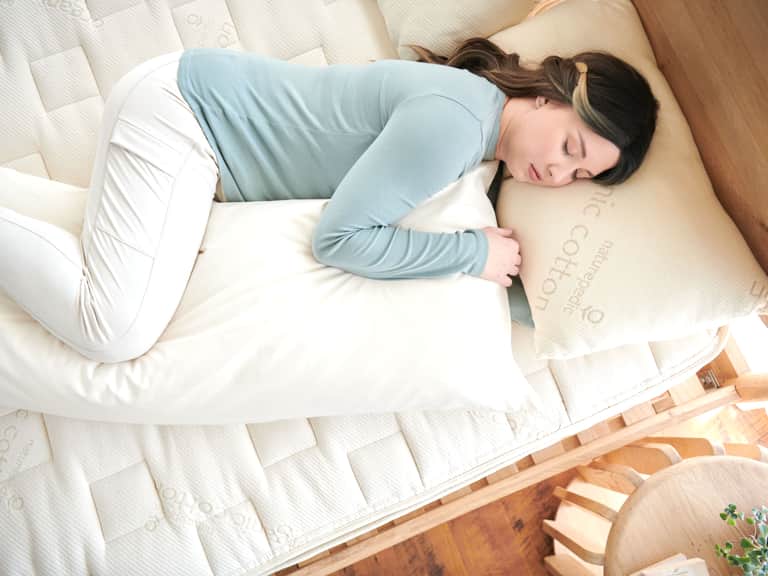
Body pillows and ordinary pillows also affect sleep posture. A pillow placed between the knees, for instance, may change how a side sleeper positions the hips, while head-pillow height can affect neck comfort. A mattress is only one part of the sleep setup, and its feel can be influenced by the bedding and foundation beneath it.
Airflow and the question of sleeping temperature
Hybrid construction is sometimes presented as a shortcut to a cooler night: coils below, open space within, more air movement. That logic has a basis, but it is incomplete. The coil core can offer more open space than a continuous slab of foam, yet the comfort layers above it may restrict how much that openness affects the surface where a person sleeps.
Heat exchange occurs through several routes, and a mattress is only one part of the bedroom’s microclimate. Room temperature, humidity, pajamas, sheets, blankets, mattress protectors, and personal physiology all matter. A thick, close-conforming comfort layer may feel warmer to one sleeper than a thinner, more responsive surface, but individual experiences vary. A mattress described as “breathable” should not be assumed to solve night sweats or other persistent symptoms.
When assessing a hybrid, consider the whole stack of materials rather than focusing only on the springs. Ask what materials sit above the coils, how thick the comfort layers are, and whether the cover is quilted or tightly fitted. Then consider the bedding that will be used with it. A breathable sheet set can help with surface comfort, but it cannot change the mattress’s underlying construction.
Motion transfer and the feel of movement
Motion transfer describes how movement in one area of the bed is felt elsewhere. It matters most to people who share a mattress and are sensitive to a partner turning, getting up, or shifting position. A spring core can contribute to a lively, responsive feel, while independently moving coils and cushioning layers may help absorb some disturbance. Neither effect is absolute.
Comfort-layer materials influence how motion travels. Materials that compress and recover slowly may dampen some movement, while a springier top may transmit more of the sensation of a shift. The coil system’s design, mattress size, bed frame, and the type of movement all contribute. A partner’s movement near the edge may feel different from a shift close to the middle.
Testing a mattress with a partner, if possible, can be more useful than relying on a single construction claim. Each person can lie in their usual position while the other changes position or gets out of bed. For online purchases, look for clear information about the trial period, returns, and any conditions that apply. Those terms are part of the practical decision, not fine print to consider after delivery.
Firmness is a combined effect
Firmness ratings are useful as a rough guide, but they are not standardized across the entire mattress industry. A “medium” from one maker may feel different from a “medium” elsewhere. The sleeper’s body weight and shape also affect how far the mattress compresses, so two people can experience the same model differently.
In a hybrid, perceived firmness reflects the interaction of the top quilting, comfort-layer thickness and response, transition material, coil support, and the sleeper. A plush surface can sit above a sturdy core; a thinner comfort layer can make the springs easier to notice. The same coil system may feel more or less firm depending on what covers it.
It is useful to separate three questions: Does the mattress feel comfortable at first contact? Does it cushion the parts of the body that need it? And does it feel stable after several minutes in a normal sleeping position? A brief test in a showroom may answer the first question better than the others. If you can test a mattress at home, spend time in each regular sleep position and avoid judging solely by sitting on its edge.
The edges, foundation, and adjustable bases
Edge support affects how stable the mattress feels when someone sits or sleeps near its perimeter. Manufacturers may reinforce the sides with firmer coils, foam encasement, or other construction methods. Stronger edges can make more of the surface feel usable, though sitting on a mattress is not the same as sleeping on it. Edge design may also influence how easily a person gets in and out of bed.
The foundation underneath matters, too. A support system should be compatible with the mattress and provide the kind of support its manufacturer specifies. A poorly matched base can affect the way a mattress performs and may have implications for warranty coverage. Check the mattress maker’s requirements for slat spacing, platform support, and frame compatibility before setting it up.
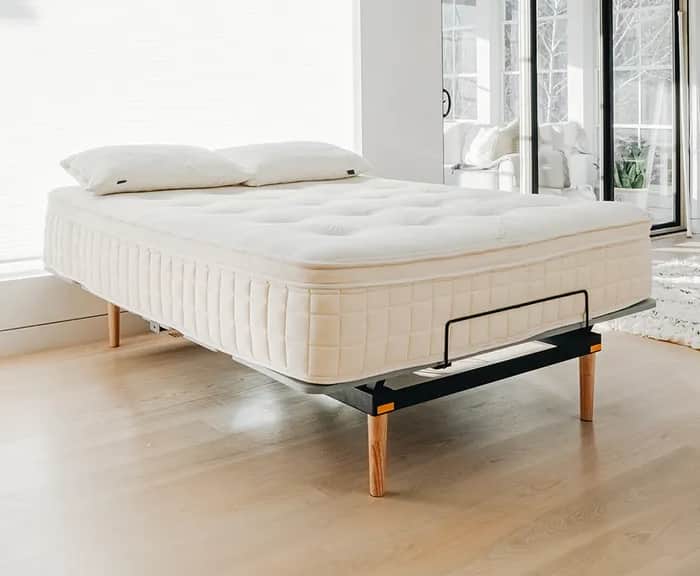
Some hybrids can be used with adjustable bases, but compatibility depends on the particular mattress. If an adjustable foundation is part of the plan, confirm that the mattress can flex as required and that the bed frame and base are suitable for the intended size and configuration. Adjustability changes the angle of the sleep surface; it does not alter the hybrid’s internal coil design or make every sleeping position appropriate for every person.
A practical way to compare hybrid mattresses
Product descriptions can turn a complicated structure into a string of reassuring terms. A more useful comparison starts with details that explain how the mattress is built and how that construction may relate to your needs. Look for specific information, but treat unverified claims and isolated numbers cautiously.
- Identify the comfort materials. Note whether the upper layers use memory foam, other foam, latex, fiber, or a combination.
- Check layer placement and thickness. The same material can behave differently depending on where and how much of it is used.
- Learn what is known about the coil system. Look for whether coils are individually wrapped or connected, and whether the perimeter is reinforced.
- Consider your sleep position and pressure points. Think about where you feel discomfort and whether you prefer a close or buoyant surface.
- Assess motion needs. If you share the bed, consider how sensitive you are to movement and whether you can test the mattress together.
- Read the trial, return, and warranty terms. Check time limits, fees, pickup arrangements, exclusions, and required foundations.
- Use consistent conditions when testing. Try the mattress with the kind of pillow, bedding, and base you expect to use at home.
Neither a high coil count nor an impressive-sounding material name is a complete measure of quality. Construction, workmanship, comfort, and durability are broader questions. Where detailed specifications are unavailable, that is useful information in itself: avoid assuming a feature exists simply because the mattress is categorized as a hybrid.
Common assumptions worth setting aside
“Hybrid means cooler.” Coils can create open space inside the mattress, but comfort layers, covers, bedding, and bedroom conditions influence the temperature a sleeper experiences.
“More coils mean a better mattress.” Coil count alone does not describe spring quality, layout, support, or how the mattress feels with its comfort layers.
“A firm mattress always supports the back better.” Firmness is not a medical treatment, and a surface that feels too hard or too soft may be uncomfortable. Support and pressure relief need to be considered together.
“A hybrid works for every sleep position.” Hybrids cover a broad range of feels. The word describes a construction approach, not a universal comfort profile.
“A mattress can diagnose or treat pain.” A mattress may influence comfort and posture, but it cannot identify the cause of pain or replace medical assessment. Ongoing or worsening symptoms should be discussed with a qualified clinician.
The architecture behind a good night
A hybrid mattress brings together two different kinds of response. Coils provide a spring-based support structure; comfort layers soften and shape the contact between that structure and the body. Their relationship determines more than a label can convey. It helps shape how the surface cushions pressure, how readily it rebounds, whether movement travels across the bed, and how much air can circulate through its layers.
The right balance is not a contest between springs and foam. It is a question of fit: the combination that feels comfortable to a particular sleeper, in a particular position, with a particular set of preferences. Read construction details as clues rather than promises. Try the mattress under realistic conditions when possible, check the foundation requirements, and give the body time to register the feel beyond the first few seconds.
That is the quiet advantage of understanding mattress construction. The bed becomes less mysterious—not a miracle product, but an arrangement of materials with strengths, limitations, and trade-offs. Once those pieces are visible, the decision can be made with clearer expectations and a better sense of what, exactly, is supporting the night.